
10 Things to Look for When Choosing Artificial Turf Manufacturers in 2026
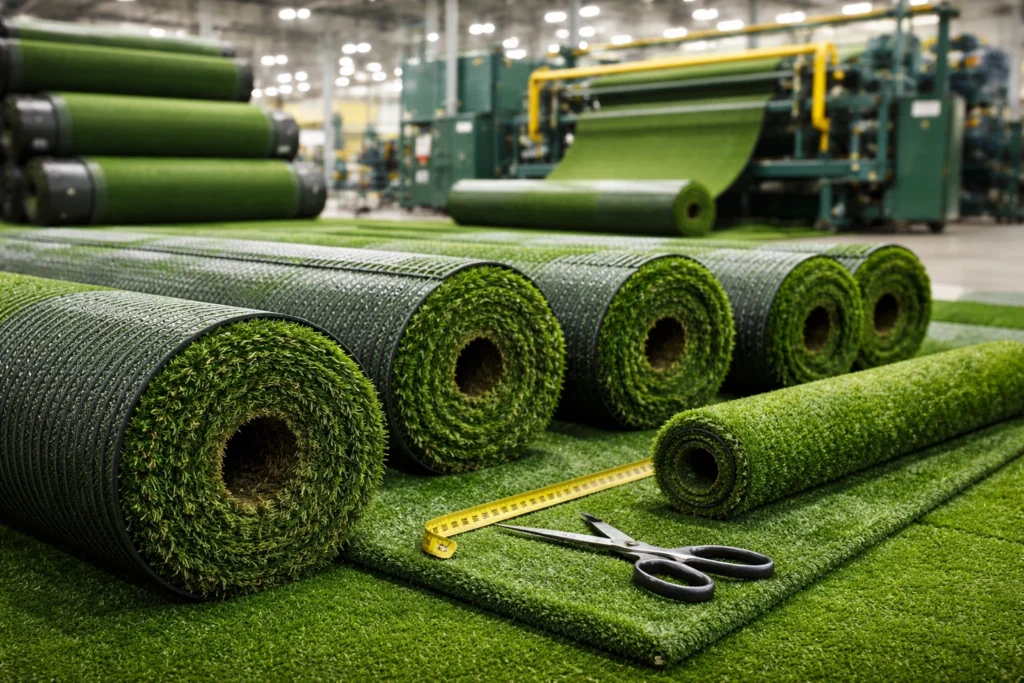
India’s sports and landscaping infrastructure is undergoing a profound transformation. With over ₹14,000 crore allocated under the Khelo India programme and Smart City Mission for 2025–2026 alone, the demand for high-performance turf solutions has never been greater. From premium residential complexes in Gurgaon and Bengaluru to football academies in Bhubaneswar and padel courts in Pune, the artificial turf market is growing at a CAGR of 9.3% — making the choice of a trusted partner more critical than ever. Choosing the right artificial turf manufacturers is not just a procurement decision — it is a long-term investment in safety, performance, and aesthetics. With dozens of vendors flooding the Indian market, separating genuine quality from cheap imitation requires a sharp eye and informed decision-making. That is exactly why Turf8, India’s leading turf construction company, has put together this essential guide — to help homeowners, facility managers, sports clubs, schools, and government bodies make the right choice in 2026. 1. Why Does FIFA/ITF/AIFF Certification Matter When Selecting Artificial Turf Manufacturers? Artificial turf manufacturers operating in India’s professional sports segment must hold internationally recognised certifications such as FIFA Quality Pro, ITF (International Tennis Federation), or AIFF-approved standards. These certifications are not formalities — they define ball-roll consistency, shock absorption, surface hardness, and durability under Indian climate conditions. In 2026, the Bureau of Indian Standards (BIS) has also tightened its norms for synthetic surfaces in government-funded school grounds and municipal sports complexes. Any manufacturer unable to produce valid certification documents should be disqualified at the outset. 2. What Types of Turf Systems Should Reputed Artificial Turf Manufacturers Offer? Artificial turf manufacturers worth your consideration should offer a full portfolio of turf systems tailored to specific use cases. A one-product vendor cannot adequately serve the diversity of India’s turf applications. In 2026, the primary categories to evaluate include: • Sports Turf: FIFA-grade football turf, cricket practice nets, padel court surfaces, tennis court systems, and pickleball courts • Landscape Turf: Residential lawns, rooftop gardens, commercial interiors, hotel lawns, and urban green zones • Specialised Systems: Child-safe playground turf, pet-friendly low-infill turf, and heat-resistant varieties for Maharashtra, Rajasthan, and Tamil Nadu summers At Turf8, we specialise in over 12 product categories — from FIFA-certified football surfaces to premium landscape solutions — ensuring clients receive the most suitable system for their project, not just the most available one. 3. How Do You Evaluate the Raw Material Quality of Artificial Turf Manufacturers? Artificial turf manufacturers that compromise on raw materials will invariably deliver surfaces that fade, shed, or deform within two to three years — especially in India’s harsh UV and monsoon conditions. When evaluating material quality, focus on these key parameters: • Yarn Type: Monofilament PE (polyethylene) is superior to slit-film or fibrillated yarns for sports use. Look for UV-stabilised, lead-free yarn with a minimum 8-year colour-fade warranty. • Backing System: Double-layer woven PP backing with polyurethane coating offers maximum dimensional stability and drainage rates of 60–80 litres per hour per sq. metre — essential during India’s monsoon season. • Infill Material: Premium EPDM rubber granules or silica sand infill, with options for cork-based eco-infill now gaining traction in green-rated buildings across Mumbai and Delhi. According to Turf8’s 2026 India market insights, approximately 34% of turf failure cases reported by sports clubs and schools in Tier 2 cities were attributable to substandard backing material — not yarn quality. Do not overlook the backing. 4. Is the Manufacturer’s Installation Expertise Relevant to Your Project’s Success? Artificial turf manufacturers who only supply rolls without offering professional installation are a red flag. The quality of installation determines up to 60% of the turf’s eventual performance and lifespan. Key installation factors to evaluate in 2026 include: • Sub-base preparation: Compacted crush stone or shock-pad layer (critical for FIFA-certified fields) • Laser-levelling to achieve surface gradients within ±3mm tolerance • Seaming and line-marking techniques that comply with BIS and international standards • Drainage infrastructure design tailored to the local groundwater table Turf8’s advanced turf technology ensures zero-compromise installation with certified on-ground supervisors, GPS-assisted levelling equipment, and a 10-year structural installation warranty on all stadium and institutional projects. 5. What Are the Realistic Costs of Artificial Turf Installation in India in 2026? Artificial turf manufacturers often advertise low per-square-foot rates without disclosing the full cost picture. Understanding realistic 2026 pricing in Indian Rupees (₹) is essential for accurate budgeting. Here is a realistic cost benchmark for the Indian market in 2026: Application Cost Range (₹/sq. ft.) Notes Football Turf (FIFA Grade) ₹140 – ₹220 Includes sub-base, infill & lines Cricket Turf (Practice) ₹90 – ₹150 Matting or full carpet system Landscape / Residential ₹60 – ₹110 Non-infill or sand-filled Tennis Court (ITF Grade) ₹160 – ₹240 Acrylic or synthetic surface Padel Court (Full Build) ₹18L – ₹28L total Glass walls + surface + lighting Pickleball Court ₹3.5L – ₹6L total Compact layout, multi-sport use These are all-inclusive estimates for 2026, factoring in material, labour, sub-base, drainage, and line-marking. Maintenance Annual Management Plans (AMPs) typically range from ₹8,000 – ₹20,000 per year depending on usage intensity and surface area. 6. How Does After-Sales Support Define the Reliability of Artificial Turf Manufacturers? Artificial turf manufacturers that disappear after delivery are a significant risk in the Indian market, where climate variations — from Delhi’s extreme heat to Cherrapunji’s rainfall — demand ongoing surface management. Evaluate after-sales support using these benchmarks: • Minimum 5-year product warranty and 10-year surface performance warranty for institutional projects • Dedicated AMC (Annual Maintenance Contract) with bi-annual grooming, infill top-up, and seam inspection • 24-hour response time for warranty claims and damage reports • Regional service presence in metro cities (Mumbai, Delhi, Bengaluru, Chennai, Hyderabad) and Tier 2 hubs (Indore, Nagpur, Kochi, Coimbatore, Lucknow) 7. Are Artificial Turf Manufacturers Aligned with