How to Select Artificial Grass Based on Usage and Foot Traffic
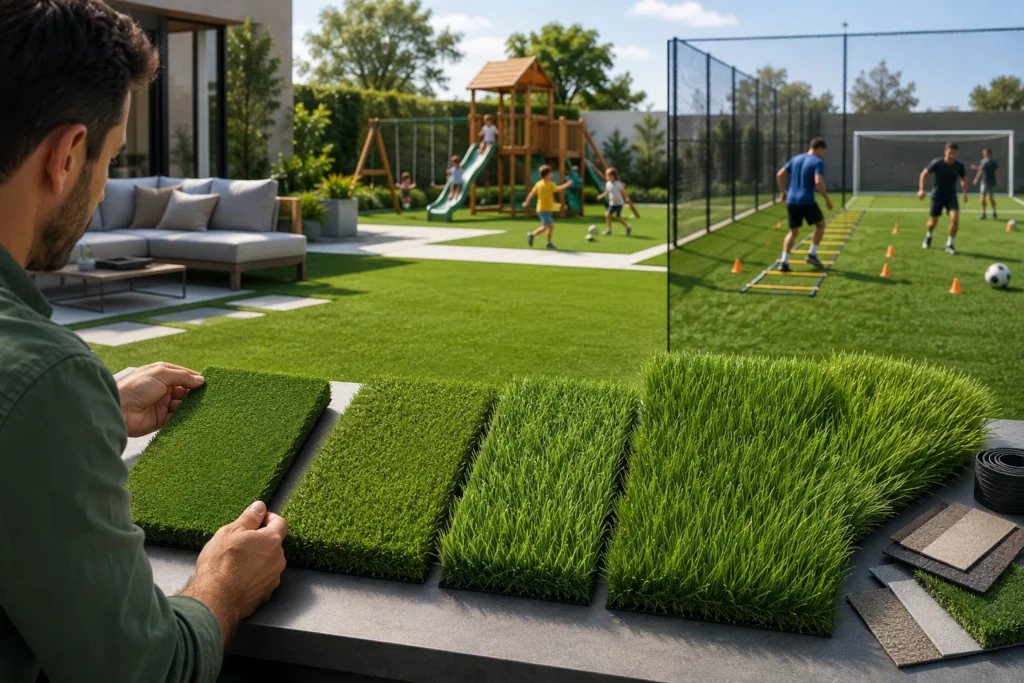
Artificial grass is no longer a one-size-fits-all product – and in 2026, choosing the wrong type for your specific usage and foot traffic level is the single most expensive mistake you can make as a property owner, facility manager, or developer in India. Walk into any turf supplier’s showroom and you’ll encounter dozens of products that look nearly identical: lush, green, and inviting. But beneath the surface, the differences in yarn material, pile height, stitch density, infill system, and backing type determine whether your turf lasts 15 years or falls apart in four. With India’s artificial turf market valued at over ₹2,100 crore in 2025–26 and growing at nearly 10% annually, the stakes for making the right selection have never been higher. At Turf8, we specialise in helping clients across India – from housing societies in Navi Mumbai to sports academies in Coimbatore – select precisely the right artificial grass for their environment, budget, and usage pattern. This guide gives you the framework to do just that. Why Does Usage and Foot Traffic Matter So Much When Choosing Artificial Grass? Artificial grass fibres are engineered to withstand a specific volume and type of mechanical stress. When the wrong product is deployed in the wrong environment, the consequences are predictable: fibre flattening, infill compaction, seam failure, drainage blockage, and ultimately, early surface replacement. India’s diverse application landscape – from rooftop gardens and hotel lobbies to school playgrounds and municipal parks – demands genuinely different turf specifications. A decorative turf perfect for a South Delhi bungalow’s lawn would be destroyed within months on a school playground with 400 children using it daily. According to Turf8’s 2026 India market insights, over 35% of artificial turf replacement enquiries the company receives involve surfaces that were installed with the wrong product grade for their actual usage – a preventable and costly outcome. Understanding your foot traffic category before selecting a product is not optional – it’s the foundation of a sound investment. What Are the Four Foot Traffic Categories for Artificial Grass in India? Artificial grass products in India can be mapped against four broad foot traffic categories. Every serious selection decision starts here. Category 1: Low Traffic – Decorative and Aesthetic Use Artificial grass in this category serves primarily visual purposes. Foot traffic is minimal – perhaps a few people walking across the surface once or twice a day. Typical applications include: Recommended specifications: Estimated installation cost: ₹100 – ₹160 per sq. ft. all-inclusive These turfs prioritise visual realism and softness over durability. Using a heavy-duty sports-grade turf in this context wastes money; using a decorative turf in a high-traffic space wastes the entire investment. Category 2: Medium Traffic – Residential and Light Commercial Use Artificial grass installations in this category face regular, sustained pedestrian use – families, children, pets – without the concentrated mechanical stress of sports play. Applications include: Recommended specifications: Estimated installation cost: ₹150 – ₹250 per sq. ft. all-inclusive This is the largest and most diverse segment of India’s artificial grass market. Products here must balance aesthetics with real-world resilience – they should look beautiful in a developer’s showflat and hold up to a five-year-old’s daily use without becoming a flat, grey mat. Category 3: High Traffic – Sports and Active Recreation Use Artificial grass designed for sports applications faces an entirely different stress profile: repetitive lateral movement, sudden stops and turns, concentrated loading from cleats or running shoes, and often continuous use across 10–14 hours per day. Applications include: Recommended specifications: Estimated installation cost: ₹400 – ₹1,200 per sq. ft. depending on sport and certification level Turf8’s advanced turf technology ensures that every high-traffic sports surface we construct uses yarn specifications independently tested for fibre durability, abrasion resistance, and UV stability – key performance factors that cheap imported alternatives routinely fail on within 2–3 years. Category 4: Extreme Traffic – Professional and Institutional Sports Infrastructure Artificial grass at this level must meet international governing body standards and endure the most punishing usage volumes in the market – professional training academies, Khelo India centres, municipal sports complexes, and government-funded stadiums. Applications include: Recommended specifications: Estimated installation cost: ₹750 – ₹2,500 per sq. ft. depending on pitch size, certification level, and location India’s Khelo India Infrastructure Programme 2025–26 has earmarked ₹1,400 crore specifically for certified artificial sports surfaces at this level, creating significant demand for institutional-grade turf across 28 states. How Do Key Technical Specifications Affect Artificial Grass Selection? Artificial grass selection involves navigating a set of technical parameters that directly determine how a surface performs over time. Here’s a plain-language breakdown of what matters most: Pile Height: Higher Isn’t Always Better Pile height (the length of the grass fibre above the backing) is one of the most misunderstood specifications. Many buyers assume taller = better. The reality is more nuanced: Choosing a 55mm pile for a rooftop garden creates an installation that is expensive, difficult to maintain, and visually inappropriate. Choosing a 20mm pile for a 5-a-side pitch creates a dangerous playing surface. Matching pile height to usage is non-negotiable. Stitch Density: The Backbone of Durability Stitch density (stitches per square metre) determines how tightly packed the fibres are and, consequently, how well the surface resists fibre flattening under repeated foot traffic. Higher stitch density = greater durability, but also higher cost. The key is matching density to actual traffic load, not simply buying the highest number available. Yarn Material: PE vs PP and Monofilament vs Fibrillated For outdoor installations in India’s UV-intense climate, UV-stabilised polyethylene monofilament is the baseline minimum specification that Turf8 recommends across all categories above Level 1. What Are the Best Artificial Grass Options for Common Indian Use Cases in 2026? Use Case Pile Height Yarn Type Est. Cost (₹/sq. ft.) Lifespan Balcony / Terrace décor 20–25mm PP or PE curled ₹100–₹160 6–10 yrs Residential lawn 35–40mm PE monofilament ₹150–₹220 12–15 yrs Housing society play area 40–45mm PE monofilament ₹180–₹260 10–14 yrs School playground 40–45mm PE slit-film ₹200–₹280 10–13 yrs Hotel / resort lawn 35–45mm