
How Long Does Artificial Grass Last in India? A Complete Lifespan Guide
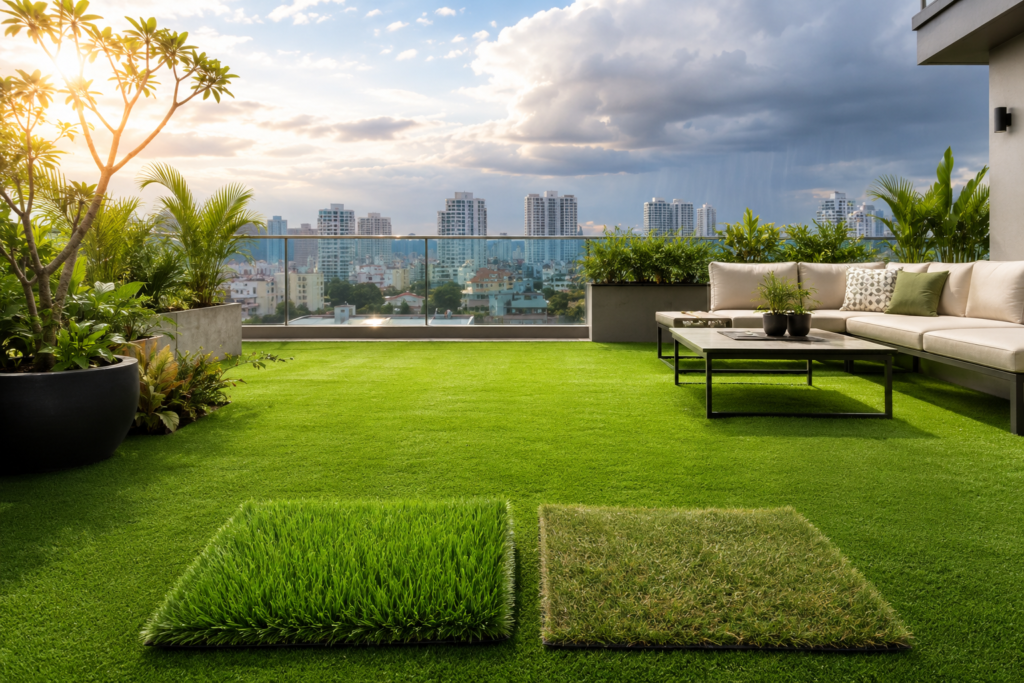
Premium artificial grass from a quality supplier like Turf8 lasts between 10 and 15 years in India’s outdoor conditions. The exact lifespan depends on four key factors: the quality of the fibres and UV stabilisation used in manufacturing, the pile height of the product, the intensity of daily use the surface receives, and the level of basic maintenance carried out. Understanding these factors helps homeowners and commercial buyers in India make an informed investment decision and get maximum value from their artificial grass installation. What Determines How Long Artificial Grass Lasts in India? 1. UV Stabilisation – The Most Critical Factor for India India’s sun is significantly more intense than in Europe or North America – the regions where many artificial grass products are originally developed and tested. UV exposure is the single most damaging factor for artificial grass fibres. Without proper UV stabilisation, fibres become brittle, fade, and lose structural integrity within 3–5 years. Turf8’s entire product range – Ultra 35, Ultra 45, and Ultra 60 – uses UV-stabilised polyethylene fibres engineered specifically for prolonged exposure to India’s high UV index. This UV stabilisation is the foundation of the 10–15 year lifespan. 2. Pile Height – How Use Intensity Affects Longevity Lower pile heights (35mm) are inherently more resilient under heavy daily foot traffic because their shorter fibres have less mechanical stress applied to them during use. Higher pile heights (45mm, 60mm) provide superior aesthetics and softness but require slightly more care in high-traffic zones to maintain fibre uprightness. For gardens and balconies in India with regular use, Ultra 35 provides the longest lifespan under intensive conditions, while Ultra 60 is designed for spaces where aesthetic quality is prioritised over maximum traffic tolerance. 3. Installation Quality – Base Preparation Matters The quality of the installation groundwork directly affects the longevity of the artificial grass above it. Poor drainage causes water to pool beneath the turf – degrading the backing and infill over time. An uneven sub-base causes the turf to shift, pucker, and wear unevenly. Turf8’s professional installation process – including correct sub-base preparation, drainage layer placement, and proper infill application – is specifically designed to maximise the lifespan of the installed surface. 4. Maintenance – What’s Needed and What’s Not Artificial grass in India does not require professional landscaping maintenance. However, simple periodic care significantly extends lifespan. Brush fibres upright every 4–6 weeks using a stiff-bristled broom. Rinse the surface with water to remove dust, debris, and pet residue. Clear fallen leaves and organic matter regularly to prevent moisture retention in the backing. Remove heavy or sharp objects that could damage fibres. These four simple actions – taking no more than 30 minutes monthly – are sufficient to maintain Turf8 artificial grass at peak condition for its full 10–15 year lifespan. Turf8 Artificial Grass Lifespan by Product and Application Product Application Expected Lifespan Traffic Level Ultra 35 (35mm) School play area, commercial 12–15 years Very High Ultra 35 (35mm) Residential garden 13–15 years Medium Ultra 45 (45mm) Balcony, terrace, garden 11–14 years Low–Medium Ultra 45 (45mm) Hotel rooftop, F&B terrace 10–13 years Medium–High Ultra 60 (60mm) Luxury balcony, villa garden 10–13 years Low Ultra 60 (60mm) Hotel lobby, penthouse terrace 10–12 years Low–Medium Frequently Asked Questions – Artificial Grass Lifespan in India Q1. How long does artificial grass last in India? Premium artificial grass from a quality supplier lasts 10–15 years in India’s outdoor conditions. Turf8’s Ultra 35, Ultra 45, and Ultra 60 products all use UV-stabilised fibres specifically engineered for India’s high UV index. With basic periodic maintenance – brushing every 4–6 weeks and occasional rinsing – Turf8 artificial grass reliably reaches its full 10–15 year lifespan. Q2. Does artificial grass fade in India’s sun? Low-quality artificial grass without UV stabilisation will fade within 3–5 years in India’s sun. Turf8’s entire product range uses UV-stabilised polyethylene fibres that are specifically designed to resist colour loss and fibre brittleness under prolonged UV exposure at India’s intensity. All Turf8 products are backed by a 10-year warranty covering UV colour retention. Q3. How long does 35mm artificial grass last compared to 45mm or 60mm in India? All three Turf8 products – Ultra 35, Ultra 45, and Ultra 60 – share the same UV-stabilised fibre technology and have comparable lifespans of 10–15 years with standard care. Ultra 35 is most resilient under heavy daily foot traffic due to its shorter pile structure. Ultra 45 and Ultra 60 may show faster fibre wear in very high-traffic commercial zones compared to Ultra 35, but perform identically in residential and light-commercial applications. Q4. How do you maintain artificial grass to maximise lifespan in India? To maximise artificial grass lifespan in India: brush fibres upright with a stiff broom every 4–6 weeks; rinse with water monthly or after pet use to remove dust and residue; clear fallen leaves and organic debris regularly to prevent moisture retention in backing; and avoid placing sharp, heavy, or hot objects on the turf surface. These simple steps – requiring approximately 20–30 minutes per month – are sufficient to keep Turf8 artificial grass at peak condition for its full 10–15 year lifespan. Q5. Does monsoon rain reduce the lifespan of artificial grass in India? No – monsoon rain does not reduce the lifespan of properly installed artificial grass in India. Turf8’s products feature perforated backing with drainage rates up to 30L/m²/hr that safely channel monsoon rainfall away from the surface. The UV-stabilised fibres and backing are specifically tested for performance under sustained humidity and heavy rainfall – conditions common to all Indian monsoon regions. Correct installation drainage is the key factor for monsoon performance, not the product itself.
Artificial Grass vs Natural Grass in India – Which Is Better for Your Space?
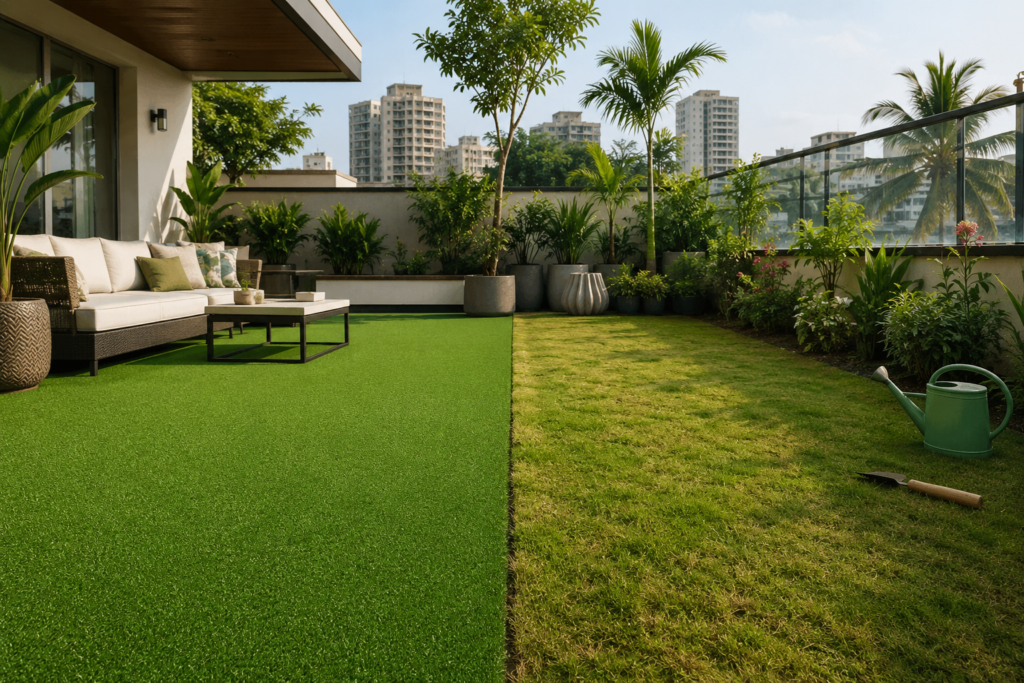
For most residential and commercial properties in India, artificial grass outperforms natural grass across almost every practical measure – including cost over time, water usage, maintenance, monsoon performance, and visual consistency. The only genuine advantage of natural grass is its 100% organic composition. However, for Indian properties where water availability is limited, monsoon seasons create mud and damage, and professional maintenance is expensive or impractical, artificial grass from a quality supplier like Turf8 is the superior long-term choice for the vast majority of applications. The Complete Comparison – Artificial Grass vs Natural Grass in India Factor Natural Grass Turf8 Artificial Grass Water Requirement 20–40 L/m²/week in dry season Zero – no irrigation needed Mowing Weekly during growing season Never required Monsoon Performance Mud, flooding, root rot Fast-draining, clean surface Summer Appearance Browns, dries, dies without water Stays green all year Maintenance Cost Regular pro landscaping required Brush & rinse only Chemical Use Pesticides, fertilisers, weedkiller Zero chemicals required Lifespan 3–5 years typical in India 10–15 years guaranteed Installation Time Weeks to establish 1–2 days, usable same day Child & Pet Safety Chemical exposure risk Non-toxic, lead-free Total 5-Year Cost High – water + maintenance Lower – one-time install cost Environmental Factor 100% natural, uses large water No water use, recyclable fibres 5 Situations Where Artificial Grass Is Clearly the Better Choice in India Frequently Asked Questions – Artificial vs Natural Grass India Q1. Is artificial grass better than natural grass in India? For most practical applications in India, yes. Artificial grass outperforms natural grass in water consumption (zero vs 20–40L/m²/week), maintenance cost (near-zero vs ongoing professional landscaping), monsoon performance (clean and usable vs muddy and damaged), lifespan (10–15 years vs 3–5 years), and chemical safety (no pesticides vs regular chemical treatments). The only area where natural grass has a genuine advantage is its fully organic, natural composition. Q2. Is artificial grass worth it in India? Yes – for most Indian homeowners and commercial property managers, artificial grass provides a better long-term return on investment than natural grass. The one-time installation cost is offset within 2–3 years by the elimination of water bills, landscaping fees, fertiliser and pesticide costs, and seasonal replanting expenses. Over a 10–15 year product lifespan, artificial grass is typically more cost-effective than maintaining a natural lawn in Indian conditions. Q3. What is the environmental impact of artificial grass in India? Artificial grass eliminates the water consumption of natural lawns – a significant environmental benefit in India’s water-stressed regions. It also eliminates the use of pesticides and fertilisers that can leach into soil and groundwater. The fibres themselves are recyclable at end of life. The trade-off is that artificial grass is a plastic product and does not support soil biodiversity the way natural grass does. For most urban Indian applications – rooftops, balconies, terraces – where soil ecosystems are already minimal, the environmental balance generally favours artificial grass due to the water-saving benefits. Q4. How does artificial grass perform in the Mumbai monsoon compared to natural grass? Artificial grass performs significantly better than natural grass during Mumbai’s monsoon season. Natural grass in Mumbai becomes waterlogged, muddy, and unusable during heavy rainfall – often suffering root rot, fungal damage, and physical erosion. Turf8 artificial grass drains up to 30 litres per square metre per hour, keeping the surface clean, stable, and fully accessible even immediately after heavy monsoon downpours.
Artificial Grass Cost per Sq Ft in Mumbai – Complete 2026 Price Guide by Turf8
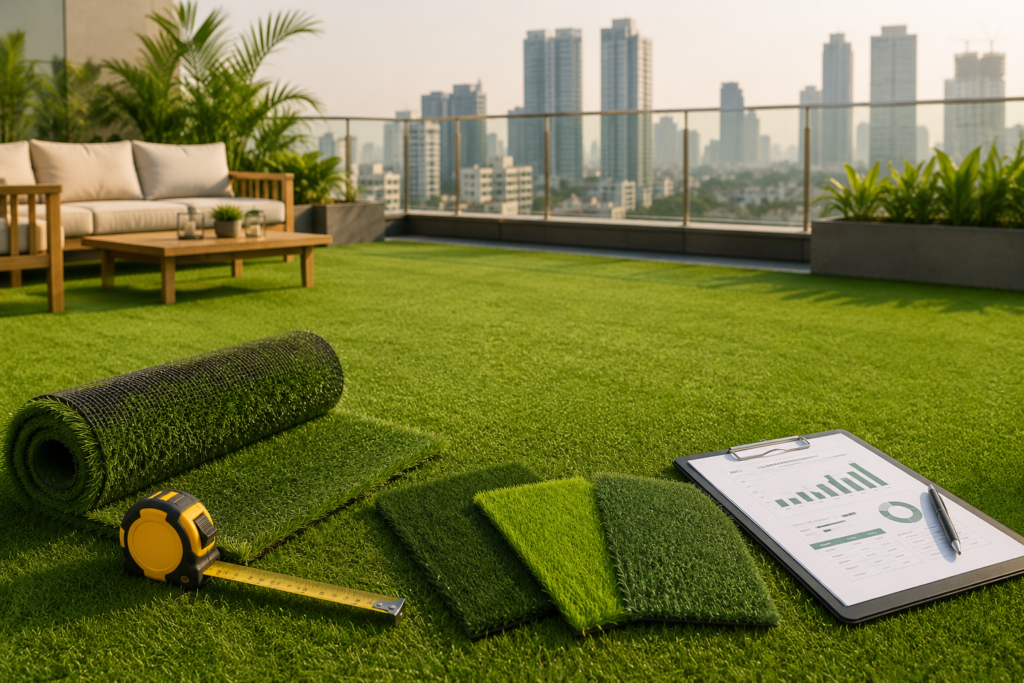
Artificial grass in Mumbai costs approximately Rs. 65 to Rs. 140 per square foot for supply and professional installation combined, depending on the pile height product selected, the total project area, and the level of surface preparation required. Entry-level artificial grass (35mm pile) starts at approximately Rs. 65–80 per sq ft installed. Premium products (45mm) range from Rs. 85–110 per sq ft. Luxury turf (60mm pile) ranges from Rs. 115–140 per sq ft installed. These are indicative market rates for quality products in Mumbai in 2025. Turf8 provides free, itemised project quotations based on a site assessment. Artificial Grass Price Guide – Mumbai 2025 Product Pile Height Supply Only Supply + Install Best For Ultra 35 35mm Rs. 45–55/sq ft Rs. 65–80/sq ft Schools, gardens, commercial Ultra 45 45mm Rs. 60–75/sq ft Rs. 85–110/sq ft Homes, hotels, terraces Ultra 60 60mm Rs. 85–100/sq ft Rs. 115–140/sq ft Luxury villas, penthouses Note: Rates above are indicative market ranges for quality artificial grass in Mumbai in 2026. Final project cost depends on area size, surface prep required, and specific project requirements. Contact Turf8 for a free itemised quote. What Affects the Cost of Artificial Grass in Mumbai? Frequently Asked Questions – Artificial Grass Cost in Mumbai Q1. How much does artificial grass cost per sq ft in Mumbai in 2026? In Mumbai in 2026, quality artificial grass supply and professional installation costs approximately Rs. 65–80 per sq ft for 35mm products, Rs. 85–110 per sq ft for 45mm products, and Rs. 115–140 per sq ft for 60mm luxury products. These are indicative ranges for quality materials from established suppliers like Turf8. Budget products from unverified sources may appear cheaper but often lack UV stabilisation and reliable product warranties, resulting in higher long-term replacement costs. Q2. Is artificial grass cheaper than natural grass over time in India? Yes – artificial grass is typically more cost-effective than natural grass over a 5–10 year period in India. Natural grass requires ongoing expenditure on watering (Rs. 500–2,000+ per month depending on area), professional landscaping, fertilisers, pesticides, and seasonal replanting. Turf8 artificial grass is a one-time installation cost with near-zero ongoing maintenance expenditure. Most Mumbai homeowners break even on their artificial grass investment within 2–3 years compared to maintaining a natural lawn. Q3. What does artificial grass installation cost for a balcony in Mumbai? A standard apartment balcony installation in Mumbai using Ultra 35 or Ultra 45 artificial grass typically costs between Rs. 15,000 and Rs. 45,000 in total depending on balcony size and product selected. Most Mumbai apartment balconies range from 30–80 sq ft – placing the typical installation cost in the Rs. 20,000–35,000 range for a mid-range product. Contact Turf8 for a free site visit and accurate project quote. Q4. How do I get the best artificial grass price in Mumbai? To get the best artificial grass price in Mumbai: choose the right pile height for your actual use case rather than always selecting the premium product; get a fully itemised quote that separates supply and installation costs; check that the product includes UV stabilisation and comes with a product warranty; and compare quotes from established, in-house installation companies rather than traders reselling imported products. Turf8 provides free, transparent project quotations with no hidden charges.
Best Artificial Grass for Balcony in India – 2026 Buyer’s Guide by Turf8
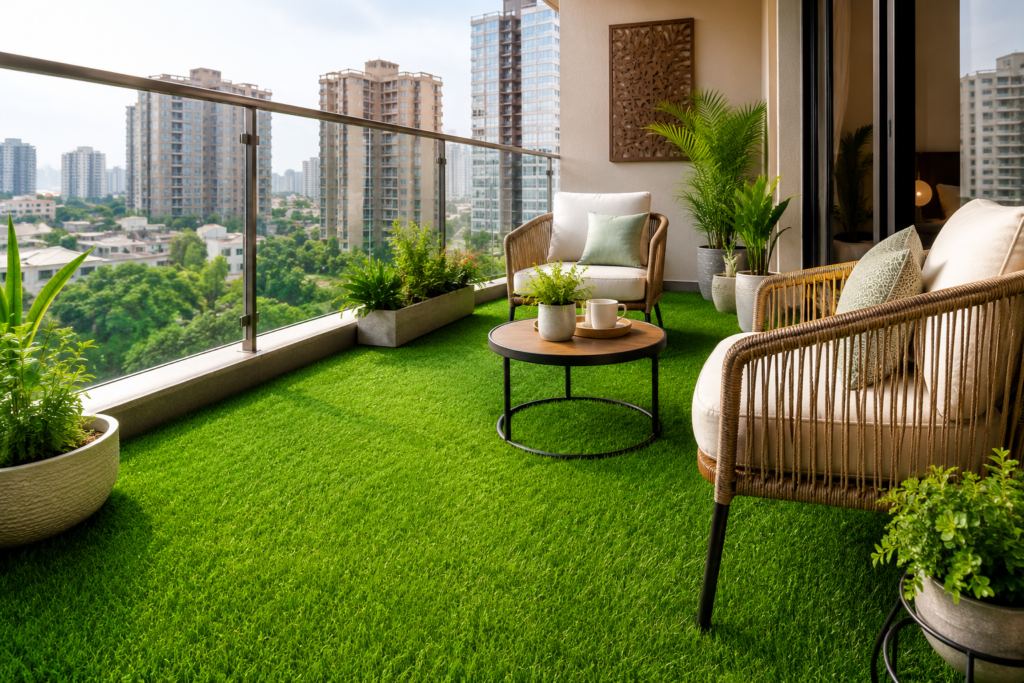
The best artificial grass for a balcony in India depends on three factors: the pile height, the UV stabilisation quality, and the drainage rate of the backing. For most Indian apartment balconies, Turf8’s Ultra 35 (35mm) is the best choice for durability and value, while Ultra 45 (45mm) is the best choice for homeowners prioritising premium aesthetics. Ultra 60 (60mm) is recommended for luxury penthouse terraces and larger balcony spaces where visual impact is the primary requirement. All three must be UV-stabilised – non-negotiable for any Indian outdoor application. How to Choose the Best Artificial Grass for Your Indian Balcony Criterion 1 – UV Stabilisation is Non-Negotiable India’s UV index is among the highest in the world. Any artificial grass installed on an Indian apartment balcony that receives direct sunlight must have UV-stabilised fibres. Without UV stabilisation, fibres become brittle, discoloured, and structurally degraded within 2–4 years. All Turf8 products – Ultra 35, Ultra 45, and Ultra 60 – use UV-stabilised polyethylene fibres specifically tested for India’s outdoor UV intensity. Always verify UV stabilisation before purchasing any artificial grass for an Indian balcony. Criterion 2 – Drainage Rate for Monsoon Performance Indian balconies are exposed to heavy monsoon rainfall. The artificial grass must have a perforated backing with a high drainage rate – at minimum 15L/m²/hr, ideally 25–30L/m²/hr. Turf8’s backing drains at up to 30L/m²/hr, ensuring water clears the balcony surface rapidly without pooling. Always check the backing drainage specification before purchasing. Criterion 3 – Pile Height for Your Usage Pattern 35mm (Ultra 35): Most durable, best for balconies with regular foot traffic, furniture, and children or pets. Most cost-effective. 45mm (Ultra 45): More luxurious appearance, denser feel, better suited to aesthetic-focused balconies with lighter use. 60mm (Ultra 60): India’s most premium balcony turf – ultra-soft, visually immersive, best for penthouse terraces and luxury apartments where appearance is the primary goal. Criterion 4 – Weight: Safe for Balcony Structural Load All Turf8 products weigh approximately 1.5–2 kg per sq metre – well within the load tolerance of standard Indian apartment balconies. No soil or heavy infill is used in balcony installations. Always confirm weight per sq metre before purchasing – some products include heavy rubber infill that may not be suitable for elevated balcony structures. FAQs – Best Artificial Grass for Balcony India Q1. Which artificial grass is best for an apartment balcony in India? For Indian apartment balconies, the best artificial grass choice depends on use. For a practical, durable balcony with children, pets, or regular foot traffic – Ultra 35 (35mm) from Turf8 is the best choice. For a premium aesthetic-focused balcony in a luxury apartment – Ultra 45 (45mm) delivers the best visual quality. Both must be UV-stabilised for Indian outdoor conditions. For penthouse terraces and large balconies where luxury is the priority, Ultra 60 (60mm) is the recommended product. Q2. Is 35mm or 45mm artificial grass better for an Indian balcony? Both are good choices for Indian balconies, but for different reasons. 35mm (Ultra 35) is more durable under heavy daily use and more cost-effective – the practical choice for most Mumbai apartment balconies. 45mm (Ultra 45) provides a denser, more natural-looking and softer surface – the aesthetic choice for homeowners who prioritise how the balcony looks and feels. Both offer the same UV stabilisation and drainage performance. If you use the balcony daily with furniture, children, or pets – choose Ultra 35. If the balcony is primarily a visual feature with lighter use – choose Ultra 45. Q3. What should I avoid when buying artificial grass for a balcony in India? Avoid artificial grass without UV stabilisation – it will degrade rapidly under India’s sun. Avoid products without a perforated drainage backing – water will pool on your balcony during monsoon. Avoid very cheap products that do not specify fibre material, pile height, or backing drainage rate – these are typically low-quality imports that fail within 2–3 years. Always buy from a supplier that provides a product warranty and has verifiable installation experience in India.
Artificial Grass in the Indian Monsoon – Complete Performance Guide by Turf8
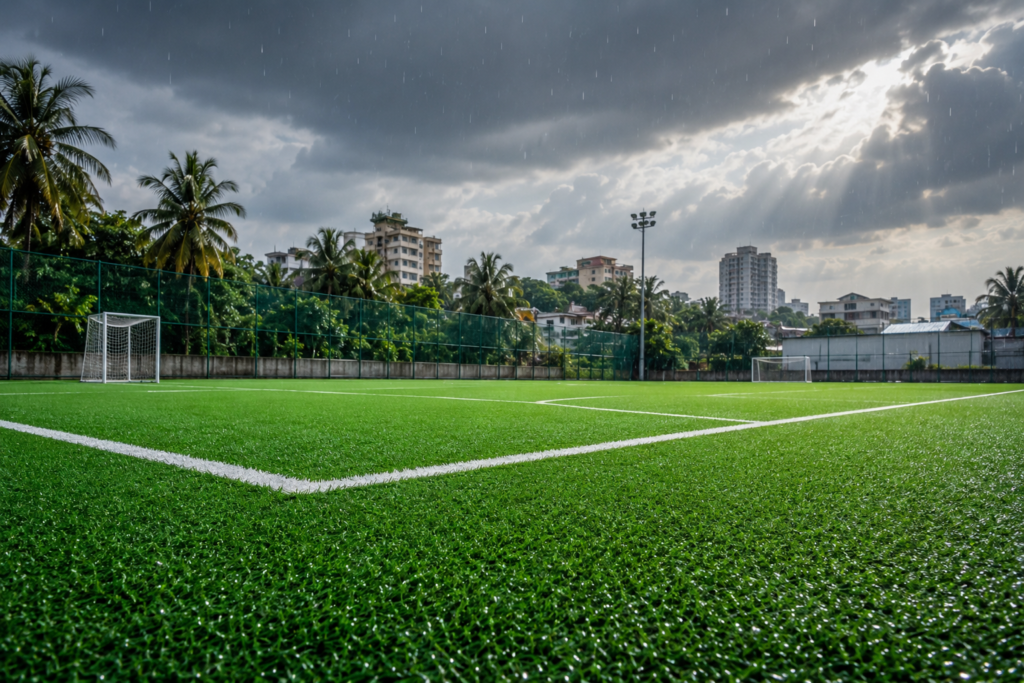
Yes – premium artificial grass works extremely well in India’s monsoon season. Turf8’s artificial grass features a perforated backing layer with a drainage rate of up to 30 litres per square metre per hour – specifically engineered to handle India’s heavy monsoon rainfall. The surface sheds water rapidly, remains clean and stable, and is fully accessible to users even immediately after the heaviest monsoon downpours. Unlike natural grass, which becomes muddy, waterlogged, and unusable during monsoon season, Turf8 artificial grass performs consistently throughout the entire June–September monsoon period across Mumbai and India. How Artificial Grass Handles Monsoon Rain – The Technical Explanation The Perforated Backing System Turf8’s artificial grass backing is perforated with drainage holes at regular intervals across the entire surface. When monsoon rain falls on the turf, water passes through the fibre layer and drains rapidly through these holes into the surface below – whether that’s a balcony drainage channel, a garden sub-base, or a rooftop drainage system. The drainage rate of 30L/m²/hr means Turf8 backing can handle approximately 30 litres of water per square metre every hour – exceeding the rainfall intensity of even Mumbai’s heaviest monsoon events. The Sub-Base Role in Garden and Terrace Installations In garden installations, Turf8 installs a compacted aggregate sub-base beneath the turf that provides additional drainage volume and stability during monsoon. Water drains through the turf backing and into the aggregate layer, which distributes it away from the surface and prevents puddling. In terrace and rooftop installations, a drainage cell underlay performs this function – channelling water to existing rooftop drainage outlets. In balcony installations, water drains directly to the balcony channel through the perforated backing. Why Natural Grass Fails in Monsoon and Artificial Grass Does Not Natural grass fails in Indian monsoon conditions because its root system sits in saturated soil – once the soil is waterlogged, the grass suffocates, the surface turns to mud, and physical erosion removes the topsoil. Restoration after monsoon requires professional re-seeding and soil repair. Artificial grass has no soil, no root system, and no organic material that can be damaged by sustained waterlogging. The synthetic fibres are inert – they do not rot, mould, or degrade when wet. Monsoon Maintenance Tips for Artificial Grass in India FAQs – Artificial Grass in the Indian Monsoon Q1. Does artificial grass work in India’s monsoon season? Yes – premium artificial grass from Turf8 is specifically designed to perform during India’s monsoon season. The perforated backing drains up to 30 litres per square metre per hour, clearing monsoon rainfall rapidly from the surface. The surface remains clean, stable, and fully accessible to users throughout the entire monsoon period. This is one of the biggest practical advantages of artificial grass over natural grass for Indian properties in high-rainfall cities like Mumbai, Pune, and Goa. Q2. Does artificial grass get damaged in the Indian monsoon? No – Turf8 artificial grass does not get damaged by monsoon rainfall. The polyethylene fibres are inert and waterproof. The backing is designed for sustained water exposure. The UV-stabilised colour does not run or fade in rain. The only risk during monsoon is if drainage channels beneath or adjacent to the installation are blocked – preventing water from escaping. This is a drainage infrastructure issue, not a turf product issue. Turf8’s installation process includes drainage assessment to prevent this. Q3. How do I maintain artificial grass on my Mumbai balcony during monsoon? Balcony artificial grass in Mumbai requires almost no special maintenance during monsoon. Ensure your balcony drainage outlet is clear before the monsoon season begins. After very heavy rainfall, give the turf a light brush to restore upright fibres. Rinse the surface with clean water if you notice residue build-up. That is all that is required – most Mumbai balcony turf owners do nothing additional to their normal routine during the monsoon season. Q4. Is artificial grass better than natural grass during Indian monsoon? Yes – significantly. Natural grass in Indian monsoon conditions becomes waterlogged, muddy, and unusable within days of the monsoon beginning. Soil erosion, root rot, and fungal damage are common. After monsoon, natural lawns require professional restoration. Artificial grass remains clean, accessible, and undamaged throughout the entire monsoon season with no additional care required. For Mumbai properties especially, this monsoon performance advantage is one of the primary reasons homeowners choose artificial grass.
How to Maintain Artificial Turf in India – Complete Year-Round Care Guide by Turf8
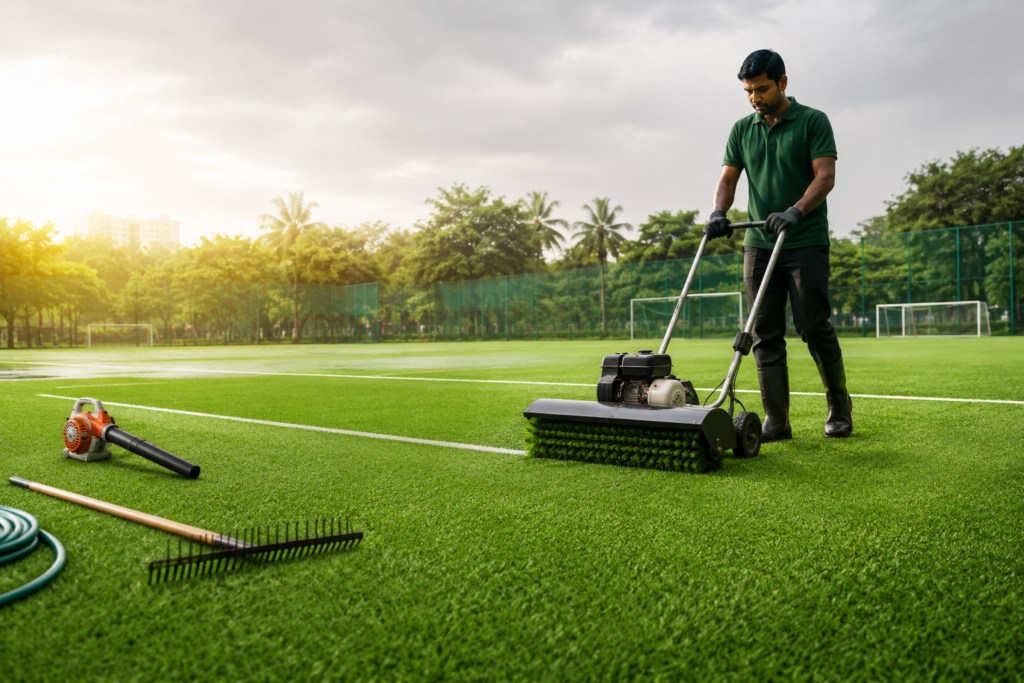
Artificial turf in India requires minimal maintenance – far less than natural grass. The core maintenance routine involves four simple tasks: brush fibres upright every 4-6 weeks, rinse the surface with water monthly or after pet use, clear debris after seasonal leaf fall, and inspect edges and joins annually. These tasks require no specialist equipment, no professional service, and no more than 20-30 minutes per month. Following this routine is sufficient to keep Turf8 artificial grass at peak condition for its full 10-15 year lifespan. Complete Artificial Turf Maintenance Schedule for India Weekly – Quick Visual Check (2 minutes) Walk over the turf surface and remove any large debris – fallen leaves, twigs, or any items left on the surface. Check that no heavy or sharp objects are resting on the turf. A quick weekly visual check prevents debris from accumulating and ensures no accidental damage goes unnoticed. No equipment required. Monthly – Brush and Rinse (20–30 minutes) Use a stiff-bristled broom or a purpose-made turf rake to brush the fibres against the grain – this lifts fibres back to an upright position, maintaining the lawn’s natural appearance. Brush in multiple directions to ensure even fibre lift. After brushing, rinse the surface with a hose to remove dust, dirt, and any residue that has accumulated. This is the single most important maintenance task for Indian artificial turf – preventing fibre flattening and maintaining the fresh, natural appearance of the lawn. Seasonal – Post-Monsoon Deep Rinse (30–45 minutes) After India’s monsoon season ends, carry out a thorough surface rinse to remove any organic material, algae residue, or monsoon-deposited debris from between the fibres. Follow with a comprehensive brush of the entire surface to restore uniform fibre uprightness. This post-monsoon session refreshes the lawn for the drier October–May period and ensures the backing drainage holes are clear. Annual – Edge and Join Inspection (15 minutes) Once per year, inspect all perimeter edges and any internal joins in the turf surface. Check that edges are securely fixed and have not lifted. Check that joins are still invisible and have not separated. Check infill levels – in garden installations with kiln-dried sand infill, the infill level may reduce slightly over the first 1–2 years and may need topping up. Contact Turf8 if you notice any edge lifting, join separation, or significant infill loss – these are simple remedial tasks that prevent larger issues developing. Pets – Spot Cleaning as Needed For artificial grass used by pets, rinse affected areas promptly with water after pet use. For solid waste, remove physically and rinse the area thoroughly. For urine, rinse with water immediately – the perforated backing will drain the water and urine away. For persistent odour, use a diluted white vinegar solution (1 part vinegar to 3 parts water) and rinse thoroughly. Avoid bleach or harsh chemical cleaners on artificial turf – these can damage fibre coatings. What You Should NEVER Do to Artificial Grass in India FAQs – Artificial Turf Maintenance in India Q1. Does artificial grass need maintenance in India? Yes – but very little. Artificial grass in India requires a monthly brush to keep fibres upright, a monthly rinse to remove dust and debris, and a post-monsoon deep rinse each year. Total maintenance time is approximately 20–30 minutes per month. No watering, mowing, fertilising, or professional landscaping service is required at any point during the lifespan of the product. Q2. How often should you brush artificial grass in India? Brush artificial turf in India every 4–6 weeks under normal use conditions. In areas with heavy foot traffic – school play areas, commercial hospitality venues, or family gardens with active children and pets – brush every 2–3 weeks to maintain fibre uprightness. Use a stiff-bristled plastic brush or a purpose-made turf rake. Always brush against the grain of the fibre to lift them back to an upright position. Q3. How do you clean artificial grass after pets in India? For pet-owned artificial grass in India: remove solid waste immediately and rinse the area with water. For urine, rinse promptly – the perforated backing drains it away. For persistent odour, apply a diluted white vinegar solution (1:3 vinegar to water), leave for 15 minutes, and rinse thoroughly with clean water. Turf8 artificial grass is non-absorbent and does not harbour bacteria when rinsed regularly. Avoid bleach or strong chemical cleaners. Q4. Does artificial grass need professional maintenance in India? No – Turf8 artificial grass does not require professional maintenance at any point during its normal lifespan. All maintenance tasks are manageable by the property owner or existing facility staff with a standard garden brush and a hose. Turf8 provides a complete care guide and post-installation briefing with every installation. The only scenario where professional attention may be needed is an edge re-fixing or infill top-up after several years – simple, low-cost remedial tasks. Q5. How do you maintain artificial grass during the monsoon season in India? During India’s monsoon season, artificial grass maintenance is minimal. Before monsoon begins, ensure all drainage channels adjacent to or beneath the turf are clear. During monsoon, no additional maintenance is needed – the rain naturally rinses the surface. After monsoon ends, carry out a thorough surface brush to restore fibre uprightness and a full rinse to clear any organic material deposited during the rainy season.