
Artificial Grass for Balcony vs Natural Grass: Which One Wins?
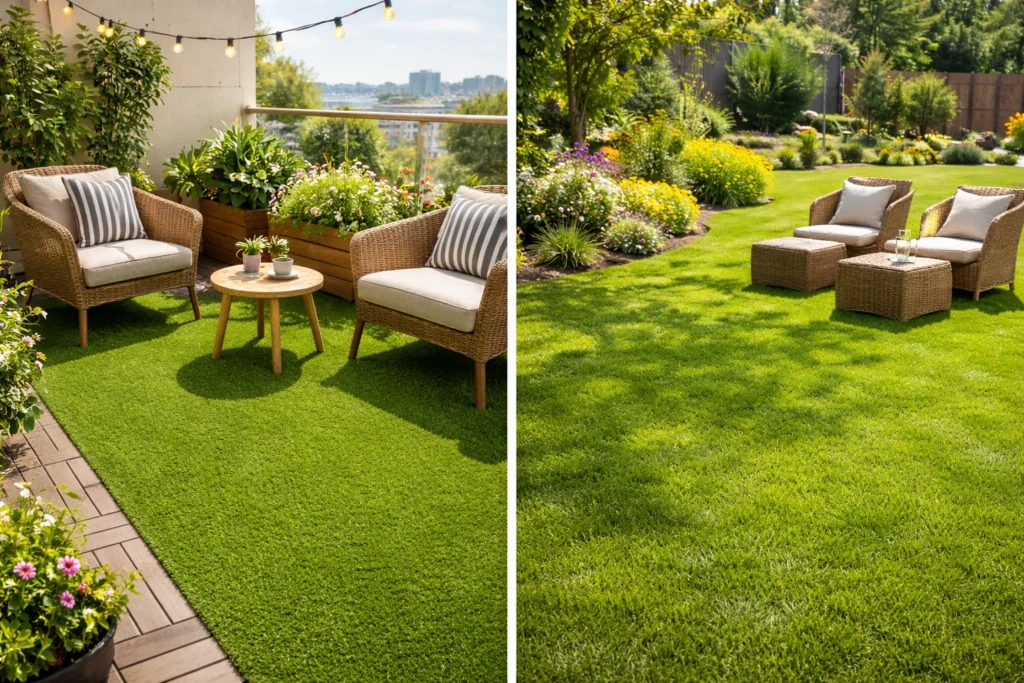
Artificial grass for balcony spaces has become one of the fastest-growing trends in Indian urban living — and for good reason. With over 500 million people living in Indian cities by 2026, the demand for green, low-maintenance outdoor spaces in apartments, penthouses, and commercial rooftops has surged dramatically. Whether you are a homeowner in Mumbai, a school administrator in Nagpur, or a property developer in Hyderabad, the question is no longer if you should install turf — it’s which type makes the most sense for your specific needs. This guide digs into the real differences between artificial and natural grass across key factors: maintenance, durability, climate suitability, cost, and sustainability in the Indian context. If you are searching for expert-grade landscape turf solutions in India — from balcony installations to large sports complexes — Turf8’s professional landscape turf services offer end-to-end solutions built for India’s diverse climate zones and urban environments. What Is the Real Difference Between Artificial and Natural Grass in India? Artificial grass for balcony and outdoor areas is engineered synthetic turf made from polyethylene, polypropylene, or nylon fibres, designed to replicate the appearance and feel of natural grass. Natural grass, on the other hand, is living plant material that requires soil, water, sunlight, and regular care to survive. In India’s context, the comparison is especially meaningful because of two major variables: extreme climate diversity (from the humidity of Kerala to the dry heat of Rajasthan) and rapid urbanisation, which is compressing green spaces into balconies, terraces, and rooftop gardens. According to India’s Ministry of Housing and Urban Affairs 2025–26 Smart Cities Mission report, over 78% of new residential complexes in metro cities are now incorporating landscaped outdoor areas as a premium feature — and turf is central to those plans. Why Is Artificial Grass for Balcony Spaces Growing So Rapidly in India in 2026? Artificial grass for balcony installations has seen a 34% year-on-year increase in demand across Indian metro cities between 2024 and 2026, driven by three core trends: • Apartment living: With the average Mumbai apartment size shrinking to under 650 sq ft, balconies and terraces have become the primary outdoor space for residents. • Water scarcity: Several Indian cities — including Chennai, Bengaluru, and Pune — have faced severe water stress, making water-hungry natural grass an impractical choice. • Wellness architecture: Post-pandemic, urban homebuyers in India are prioritising biophilic design, and synthetic turf offers an instant green aesthetic with zero upkeep. At Turf8, we specialize in understanding exactly these urban dynamics. Our balcony turf installations are specifically engineered with UV-stabilised fibres, anti-slip backing, and superior drainage layers that handle India’s monsoon rainfall without waterlogging. How Does Artificial Grass Compare to Natural Grass for Indian Climate Conditions? Artificial grass for balcony and outdoor areas holds a significant advantage in India’s climate extremes. Here is a direct comparison across the key parameters that Indian property owners, institutions, and developers care about most: Factor Artificial Grass Natural Grass Water Requirement Near zero — no irrigation needed High — 30–50 litres/sq m/week Maintenance Effort Minimal — brush + rinse periodically Intensive — mowing, fertilising, reseeding Monsoon Performance Excellent with proper drainage base Prone to waterlogging and disease Heat Tolerance Premium fibres UV-stabilised for Indian sun Can yellow and die in peak summer Longevity 8–15 years with professional installation Requires rework every 1–3 years Allergen Risk None — ideal for children and allergy sufferers Pollen, grass allergies possible Sports Use FIFA, ITF, and BIS-grade options available High-grade natural turf is costly to maintain Is Artificial Grass for Balcony Installations Worth It for Residential Projects in India? Artificial grass for balcony spaces is particularly well-suited for Indian residential projects — from premium apartments in Gurugram and Bengaluru to mid-range housing societies in Pune and Ahmedabad. Here is why residential developers and homeowners increasingly prefer it: • Zero soil mess on balconies and terraces — critical for high-rise living • Child-safe and pet-friendly surface with anti-bacterial backing options • Instant green makeover with no waiting period for growth or seeding • Works on concrete, wood, and composite balcony flooring without structural modification • Significantly reduces water consumption — a key sustainability metric for green building ratings like GRIHA and IGBC According to Turf8’s 2026 India market insights, residential projects in Tier 1 cities that include high-quality artificial turf installations report up to a 12% premium in perceived property value during resale and rental, particularly in the luxury and upper-mid segment. How Does Turf8 Serve Sports Stadiums, Schools, and Government Projects Across India? Artificial grass for balcony gardens is just one part of the picture. Turf8’s expertise extends across India’s most demanding infrastructure categories — sports, education, and government development. Sports Infrastructure India’s sports infrastructure is undergoing a transformational upgrade ahead of the country’s hosting ambitions for international tournaments. The Sports Authority of India (SAI) has earmarked over ₹3,200 crore for grassroots sports infrastructure development in the 2025–27 budget cycle — and a significant portion is allocated to turf upgrades in football, hockey, cricket, and tennis facilities. Turf8’s advanced turf technology ensures that sports surfaces meet international performance standards, including FIFA Quality Pro certification for football fields and ITF classification for tennis courts, making Turf8 a preferred partner for stadium and sports complex contractors. School and Education Campuses Schools across metro and Tier 2 cities are rapidly upgrading their play areas and sports grounds with artificial turf. The New Education Policy 2020’s emphasis on physical education infrastructure has accelerated procurement by Central and State government schools alike. Synthetic turf for school grounds is particularly effective in India because it eliminates the mud problem during monsoons, reduces injury risk from uneven ground, and provides a consistent playing surface year-round without any irrigation or fertiliser costs. Government and Municipal Projects India’s Smart Cities Mission and AMRUT 2.0 urban development programmes have created significant demand for high-quality landscape turf in