
How to Choose the Right Artificial Turf for Home Garden in India
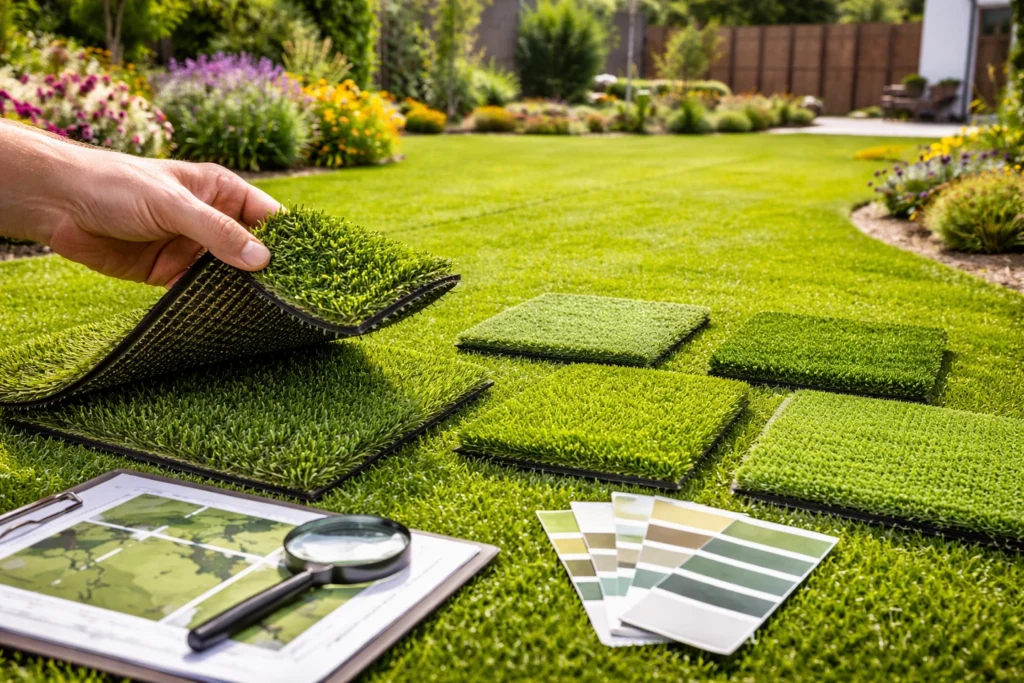
Why Are Indian Homeowners Choosing Artificial Turf for Home Garden in 2026? Artificial turf for home garden use has surged from a niche luxury to a mainstream landscaping choice across India’s metros and Tier 2 cities. Rising water scarcity, unpredictable monsoon patterns, and increasingly busy urban lifestyles have made the case for low-maintenance green spaces undeniable. According to the India Green Infrastructure Report 2025–2026, the residential landscaping market is projected to exceed ₹8,400 crore by the end of 2026, with artificial turf accounting for nearly 34% of all new residential garden installations in cities like Mumbai, Bangalore, Hyderabad, and Pune. Artificial turf for home garden projects is no longer just about aesthetics. Homeowners are making smart, long-term investments in spaces that stay green through scorching summers, waterlogged monsoons, and dry winters alike. If you are exploring premium artificial turf for landscape and garden use, you need a trusted partner who understands both the material science and India’s unique climate demands. At Turf8, we specialize in designing and installing high-performance artificial turf solutions tailored for Indian homes, residential complexes, commercial properties, schools, sports stadiums, and government projects across the country. This guide walks you through everything you need to know before making your decision. What Are the Key Factors to Consider When Choosing Artificial Turf for Home Garden in India? Artificial turf for home garden installation is not a one-size-fits-all decision. The right product depends on your specific environment, usage patterns, and budget. Here are the most critical factors Indian homeowners must evaluate: 1. Pile Height: How Tall Should the Grass Look? Pile height determines the natural appearance and underfoot feel of your lawn. For home gardens in India: • 25–30 mm pile height: Ideal for decorative balcony gardens and compact terrace spaces • 35–40 mm pile height: Best for open lawns, villa gardens, and play areas for children • 40–45 mm pile height: Recommended for large residential complexes and landscaped entranceways 2. Yarn Type and Material Quality: What Makes Turf Durable in Indian Conditions? Artificial turf for home garden use in India must withstand temperatures that can climb beyond 45°C in Rajasthan, Gujarat, and Maharashtra summers. Monofilament polyethylene (PE) yarn is the gold standard, offering a realistic look, UV resistance, and durability of up to 15–18 years. Cheaper polypropylene (PP) yarns tend to flatten and discolour within 3–4 years under Indian sun exposure. 3. Drainage System: Can It Handle India’s Monsoon Rainfall? India’s monsoon season brings intense, concentrated rainfall, especially in cities like Mumbai (average 2,400 mm annually) and Chennai. A perforated backing system with a minimum drainage rate of 30 litres per square metre per minute is non-negotiable for Indian gardens. Poor drainage leads to waterlogging, bacterial growth, and structural damage to the turf backing. 4. Infill Material: Sand, Rubber Crumb, or Organic? Infill stabilises turf fibres, improves shock absorption, and regulates surface temperature. For residential gardens in India: • Silica sand infill: Cost-effective and suitable for decorative gardens (approx. ₹80–₹120 per sq. ft installed) • Rubber crumb infill: Preferred for children’s play areas and pet-friendly gardens • Organic infill (cork or coconut coir): Eco-friendly option gaining popularity in Tier 1 Indian cities How Much Does Artificial Turf for Home Garden Cost in India in 2026? Artificial turf for home garden installation in India falls across a broad price spectrum depending on turf grade, pile height, infill type, and area. Based on Turf8’s 2026 India market insights, here are realistic cost benchmarks: Category Cost per sq. ft. (Installed) Typical Use Case Entry-level (PP yarn) ₹75 – ₹110 Balcony / terrace decoration Mid-range (PE monofilament) ₹120 – ₹180 Home garden / compound lawn Premium (PE + thatch layer) ₹185 – ₹260 Luxury villa / landscape feature Sports-grade (FIFA/ITF spec) ₹280 – ₹420 Residential sports court / school ground Maintenance costs for artificial turf in India are significantly lower than natural grass. On average, homeowners save between ₹4,000 and ₹12,000 annually on water bills, fertilisers, pest control, and lawn mowing services, depending on the size of the installation area. Why Is Professional Turf Construction Important for Home Gardens in India in 2026? Artificial turf for home garden projects may look straightforward, but incorrect installation is one of the leading causes of premature product failure. Common DIY mistakes include inadequate sub-base compaction, poor edge finishing, improper seaming, and insufficient drainage gradients. These errors lead to rippling surfaces, weed ingress through the backing, and uneven wear. Professional installation by experienced turf construction companies ensures correct base preparation (typically a 75–100 mm compacted aggregate sub-base), precise seaming with approved adhesive tapes, and calibrated infill distribution. Turf8’s advanced turf technology ensures each installation passes a multi-point quality checklist before handover, giving homeowners confidence in the long-term performance of their investment. Across metro projects, Turf8 has completed installations for residential complexes in Mumbai’s Navi Mumbai corridor, gated communities in Bangalore’s Whitefield and Sarjapur Road belt, and school playgrounds across Pune, Nagpur, and Nashik. The company is also actively expanding into Tier 2 and Tier 3 markets including Indore, Raipur, Coimbatore, and Bhubaneswar, where demand for low-maintenance green spaces is growing rapidly. What Is the Difference Between Natural Turf and Artificial Turf for Home Garden Use in India? Artificial turf for home garden applications competes directly with natural grass lawns. Here is a clear comparison relevant to Indian conditions in 2026: • Water consumption: Natural grass lawns in India require 25–40 litres of water per square metre per week. Artificial turf requires zero irrigation after installation. • Maintenance time: Natural lawns demand weekly mowing, seasonal fertilising, and pest treatment. Artificial turf requires only periodic brushing and light rinsing. • Year-round appearance: Natural grass browns in Indian summers and monsoon waterlogging. Artificial turf retains its colour and texture in all seasons. • Lifespan: High-quality artificial turf lasts 12–18 years. Natural grass needs re-turfing every 3–5 years in