
How to Maintain a Football Turf Ground fb
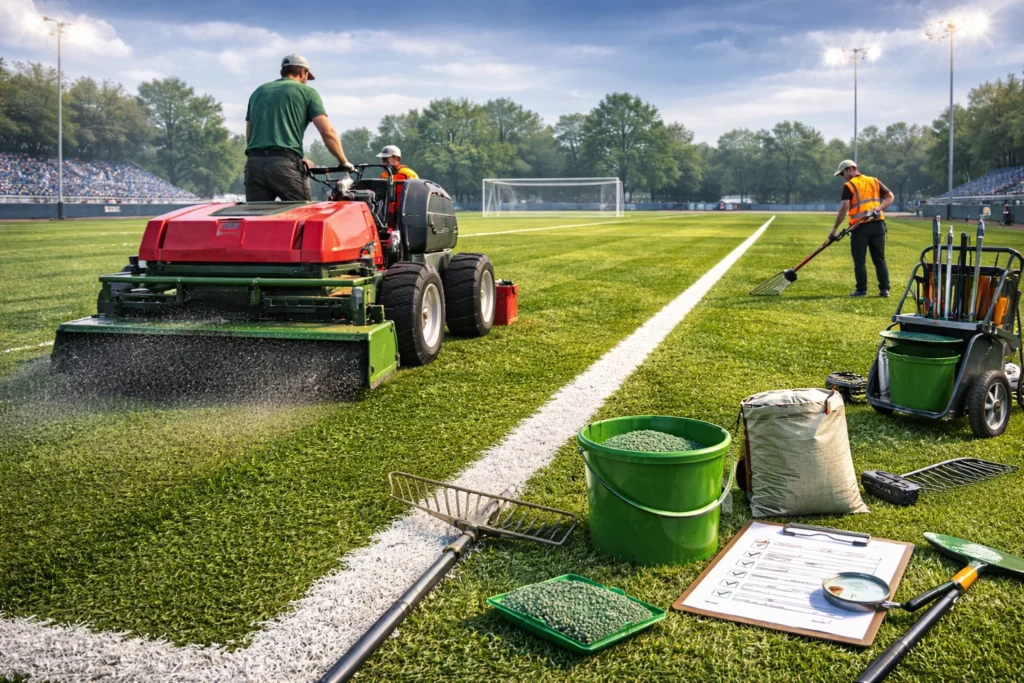
Maintaining a Football Turf Ground is paramount for ensuring player safety, optimal performance, and extending the lifespan of the playing surface. As the demands on sports facilities continue to grow, particularly with the evolving standards of 2026, effective maintenance strategies are more crucial than ever. At Turf8, we understand the significant investment a high-quality football turf represents, and our insights are geared towards helping facility managers and sports organizations protect that investment. This comprehensive guide will delve into the best practices, essential equipment, and latest innovations to keep your football turf ground in pristine condition for years to come. Why is Football Turf Ground Maintenance Important in 2026? Football Turf Ground longevity directly correlates with consistent and proper maintenance. Without a diligent upkeep regimen, even the most advanced artificial surfaces can degrade rapidly, leading to costly repairs or premature replacement. In 2026, with increased scrutiny on player welfare and performance metrics, the importance of a well-maintained football turf ground cannot be overstated. A properly cared-for surface minimizes the risk of injuries by ensuring consistent shock absorption and reducing abrasive friction, critical factors highlighted by organizations like FIFA. Furthermore, a pristine Football Turf Ground enhances the playing experience. Consistent ball roll, predictable bounce, and optimal surface hardness contribute to a higher quality game, allowing athletes to perform at their peak without concerns about uneven or unsafe playing conditions. According to Turf8’s insights, facilities that prioritize proactive maintenance often report higher user satisfaction and greater utilization rates, demonstrating the tangible benefits of a dedicated maintenance program. The environmental benefits also play a role, as extending the life of a turf system reduces waste and the need for new material production. People Also Ask: How often should a football turf ground be inspected? Regular inspections are vital. A Football Turf Ground should undergo daily visual checks for debris and immediate hazards, weekly assessments for infill levels and high-wear areas, and professional annual inspections for structural integrity and performance testing, such as G-max ratings. People Also Ask: Does poor maintenance affect player performance on artificial turf? Absolutely. A poorly maintained Football Turf Ground can lead to inconsistent ball behavior, reduced traction, and increased fatigue, all of which negatively impact player performance and can contribute to injuries. Maintaining optimal infill levels and fiber uprightness ensures the surface performs as designed. How to Maintain a Football Turf Ground for Long-Term Use Effective maintenance of a Football Turf Ground involves a combination of routine tasks, specialized equipment, and a proactive approach to address potential issues before they escalate. A well-structured maintenance plan, tailored to the specific usage and environmental conditions of your facility, is key to maximizing the lifespan and performance of the turf. What are the essential daily and weekly maintenance tasks for a Football Turf Ground? Daily and weekly maintenance are the bedrock of preserving a Football Turf Ground. These tasks are relatively simple but cumulatively have a significant impact on the turf’s condition. Daily, it is crucial to conduct visual inspections for any debris such as leaves, litter, or foreign objects that could impede drainage or cause player injury. Prompt removal of these items prevents them from becoming embedded in the infill. Weekly, a light rinse with water can help remove dust, pollen, and other superficial contaminants, especially in dry climates. Furthermore, Turf8 experts suggest paying close attention to high-wear areas like penalty spots, goalmouths, and sidelines, as these zones often require more frequent attention. Regular brushing or grooming is another critical weekly or bi-weekly task, depending on the intensity of use. This process helps to keep the turf fibers upright, preventing matting and maintaining the aesthetic appeal and playability of the Football Turf Ground. Brushing also aids in redistributing the infill material evenly across the surface, which is essential for consistent shock absorption and ball dynamics. For this, specialized power brooms or turf groomers are highly effective, ensuring thorough and efficient coverage. People Also Ask: What is infill and why is it important for artificial turf? Infill refers to the granular material, typically rubber or sand, spread between the blades of artificial grass on a Football Turf Ground. It provides cushioning, stability, and helps the fibers stand upright, mimicking the feel and performance of natural grass. It is crucial for shock absorption, player safety, and ball bounce. What specialized equipment is needed for Football Turf Ground maintenance? Investing in the right equipment is fundamental for efficient and effective Football Turf Ground maintenance. Beyond basic cleaning tools, several specialized machines can significantly enhance your maintenance efforts and ensure the longevity of the turf. These include: Equipment Type Primary Function Importance for Long-Term Use Turf Groomers/Brushes Lift fibers and redistribute infill Prevents matting and ensures consistent playability Infill Top-Dressers Apply and replenish infill material Maintains optimal cushioning and fiber support Sweepers/Vacuums Remove embedded debris and organic matter Prevents drainage issues and infill contamination Decompaction Tools Loosen compacted infill layers Restores shock absorption and drainage capacity Enzyme Cleaners Neutralize odors and bacteria Essential for hygiene, especially in multi-use areas According to Turf8’s 2026 maintenance protocol, the integration of advanced technology is also becoming increasingly prevalent. This includes AI-powered robotic groomers, such as the LUBA 3 AWD series, which can autonomously manage routine brushing and even adapt to specific field conditions, optimizing maintenance schedules and reducing manual labor. These innovations represent a significant leap forward in maintaining a Football Turf Ground with precision and efficiency. People Also Ask: How often should infill levels be checked on a football turf ground? Infill levels on a Football Turf Ground should be checked monthly, or more frequently in high-traffic areas. Consistent infill depth (typically 20-40mm) is vital for player safety and turf performance. Regular checks help identify areas needing replenishment or redistribution. What are the 2026 innovations in Football Turf Ground maintenance? The landscape of Football Turf Ground maintenance is continually evolving, with 2026 seeing significant advancements in technology and sustainable practices. These innovations are designed to make turf care more efficient, environmentally friendly, and ultimately, to enhance the