
How to Choose the Right Artificial Turf for Your Sport?
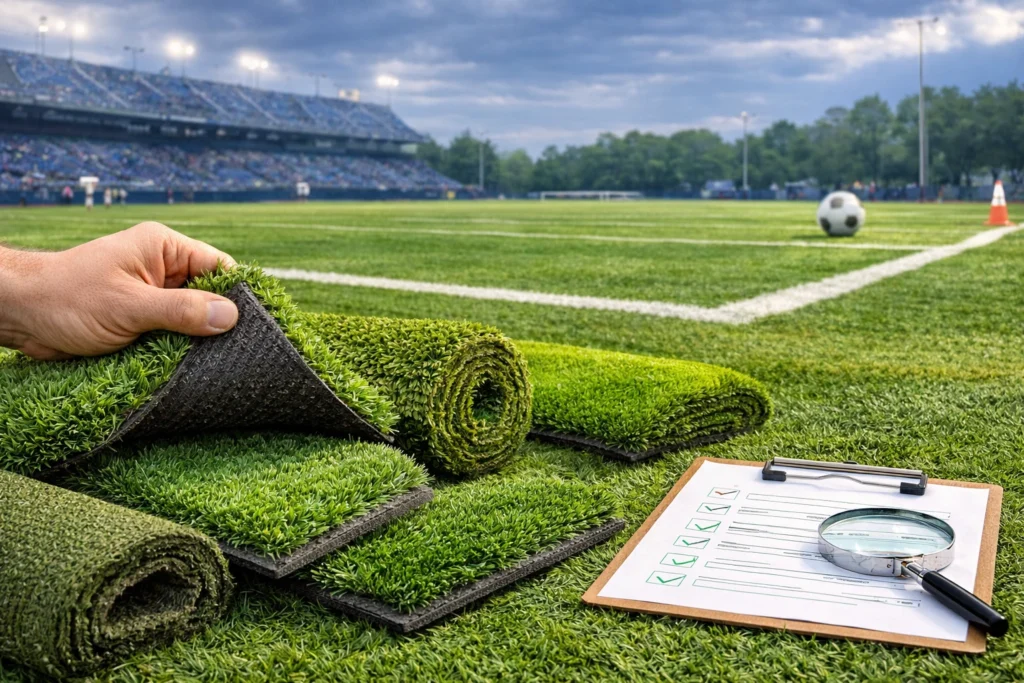
Artificial Turf for Your Sport has become an increasingly popular choice for athletic facilities worldwide, offering durability, reduced maintenance, and consistent playability. As we move into 2026, advancements in artificial turf technology continue to redefine what’s possible, providing tailored solutions for a diverse range of sports. This guide, brought to you by Turf8, aims to demystify the selection process, ensuring you make an informed decision that aligns with your athletic needs and long-term goals. Why is Artificial Turf for Your Sport a Smart Investment in 2026? Artificial Turf for Your Sport offers numerous advantages over natural grass, making it a compelling option for modern sports facilities. In 2026, the global artificial turf market is estimated to be valued between $7.31 billion and $7.93 billion, reflecting a strong growth trajectory driven by increasing demand for high-performance, low-maintenance, and water-efficient playing surfaces. This underscores a broader recognition of artificial turf’s benefits, from year-round playability to significant cost savings on water and upkeep. How does Artificial Turf for Your Sport contribute to sustainability? One of the most significant advancements in Artificial Turf for Your Sport is its evolving role in sustainability. Modern artificial turf systems are designed with environmental considerations in mind, addressing concerns about water conservation and material lifecycle. Many systems now incorporate recyclable turf materials, contributing to a circular economy. Furthermore, the adoption of organic infills, such as cork, coconut husks, and walnut shells, is on the rise, replacing traditional crumb rubber. In 2026, the demand for eco-friendly infill materials is approximately 30% of the total market, with projections to reach 45% in the near future. This shift highlights a commitment to reducing environmental impact while maintaining high performance standards. What are the Key Considerations When Choosing Artificial Turf for Your Sport? Selecting the optimal Artificial Turf for Your Sport requires a careful evaluation of several factors, including the specific sport, expected usage, safety features, and long-term maintenance. At Turf8, we emphasize a holistic approach, considering both immediate performance needs and future operational efficiency. How does the type of sport influence Artificial Turf for Your Sport selection? The demands placed on Artificial Turf for Your Sport vary significantly depending on the athletic activity. Each sport has unique requirements for ball roll, player-surface interaction, and impact absorption. For instance, a soccer field requires different characteristics than a tennis court or a golf putting green. What are the latest innovations in Artificial Turf for Your Sport technology? Artificial Turf for Your Sport technology is continuously evolving, with significant innovations focusing on player safety, comfort, and environmental impact. Two prominent areas of development in 2026 are cooling technologies and advanced fiber designs. How does artificial turf cooling work in 2026? Surface heat has historically been a concern with artificial turf, particularly in warmer climates. However, innovations in cooling technologies are effectively addressing this issue. Systems like T°Cool® utilize evaporative cooling, where specialized infill coatings release moisture to reduce surface temperatures by 30-50°F. This ensures a more comfortable and safer playing environment, even during peak summer months. According to Turf8’s insights, integrating such cooling solutions is becoming a standard recommendation for facilities in hot regions. Why are advanced fiber designs important for Artificial Turf for Your Sport? Fiber innovations play a crucial role in enhancing the performance and longevity of Artificial Turf for Your Sport. In 2026, multi-tone fibers are increasingly used to create a more realistic appearance, mimicking the varied hues of natural grass. Beyond aesthetics, advancements in yarn shapes, such as S-shaped, U-shaped, and diamond-shaped profiles, improve fiber resilience and memory,” allowing the turf to stand upright longer and resist flattening under constant play. These innovations contribute to both the aesthetic appeal and the functional performance of the turf, ensuring a consistent playing surface over time. What role do infill systems play in Artificial Turf for Your Sport performance? Artificial Turf for Your Sport systems rely heavily on infill materials and shock-absorbing layers to ensure player safety and optimal performance. Infill supports the turf fibers, provides cushioning, and influences surface traction. While traditional sand-and-rubber infill systems remain common, there’s a growing trend towards alternative infills designed to reduce heat and improve environmental performance. Shock pads, installed beneath the turf, are crucial for regulating force reduction and vertical deformation. They absorb impact, reducing stress on players’ joints and extending the lifespan of the turf system. Ignoring these layers can lead to harder surfaces and an increased risk of injury. Turf8’s experts can guide you through the best infill and shock pad combinations for your specific sport and usage intensity. Durability, Safety, and Maintenance: Long-Term Value of Artificial Turf for Your Sport Choosing Artificial Turf for Your Sport is a long-term investment, and understanding its durability, safety features, and maintenance requirements is crucial for maximizing its value. A high-quality artificial turf system, properly installed and maintained, can perform for 10 years or more. How is the lifespan of Artificial Turf for Your Sport determined? The lifespan of Artificial Turf for Your Sport is influenced by several factors, including the quality of materials, the design of the system, and the intensity of usage. Fields with high player loads, such as those used for professional sports or frequently for multiple activities, require turf with stronger yarn resilience, reinforced backing, and higher stitch density. These features help resist wear in critical zones and prevent issues like fiber collapse or seam damage. Investing in a system that matches your expected usage intensity will prevent costly early replacements and ensure consistent performance throughout its lifecycle. Why is player safety paramount in Artificial Turf for Your Sport selection? Player safety is a non-negotiable aspect when selecting Artificial Turf for Your Sport. Key safety considerations include shock absorption, surface traction, and resistance to skin abrasion. Turf systems that are too hard or too abrasive can increase the risk of injuries. Modern artificial turf systems are engineered to provide optimal force reduction, mimicking the cushioning of natural grass while offering superior consistency. Additionally, advancements in fiber technology have led to turf surfaces